
Housing and Dormitory Life in China: A Student Guide
On-campus dorms or off-campus apartments? Here's what international students should expect from housing in China — costs, setup, apps, and what to pack.
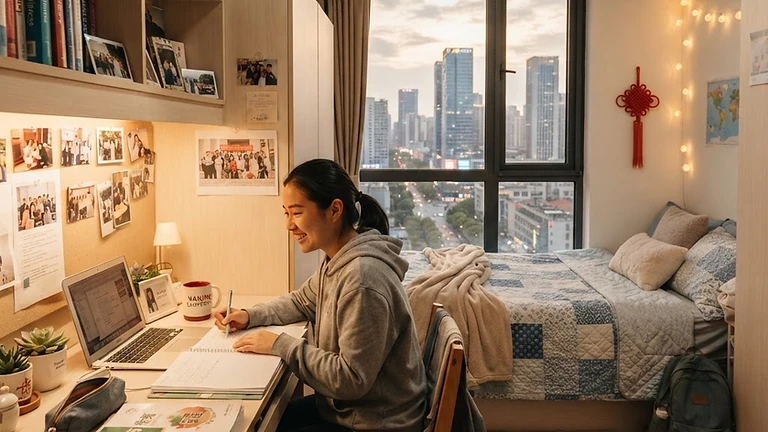
Where you live shapes your whole experience studying in China. The good news: housing is generally affordable and universities make it straightforward for international students. Here's what to expect from dorms, apartments, costs, and the practical setup.
On-campus dormitories
Most Chinese universities provide dormitories specifically for international students. These are usually the easiest option, especially in your first year.
- Room types: Single, double, or shared suites. Singles cost more and may be limited.
- Furnishings: Typically a bed, desk, wardrobe, air conditioning, and sometimes a small bathroom or shared facilities.
- Amenities: Common rooms, laundry, and sometimes a shared kitchen; many campuses have canteens instead.
- Cost: Often billed per semester — roughly USD 300–900 for a shared room, more for a single.
- Rules: Curfews, visitor policies, and registration requirements vary by university.
On-campus life puts you steps from class and is a great way to meet other international students.
Off-campus apartments
After your first year, many students move off-campus. This gives more space and independence but more responsibility.
- Cost: Shared apartments range from about USD 200–600 per month depending on the city (Shanghai and Beijing are pricier).
- Leases: Usually require a deposit and several months' rent upfront; contracts are often in Chinese.
- Location: Pick somewhere on or near a metro line close to campus.
- Utilities: Electricity, water, and internet are usually paid separately.
How to find housing
- University international office: Often the best first stop for dorm allocation and approved off-campus options.
- Apps and platforms: Wellfound, Ziroom, Lianjia, and local WeChat groups are common — but read listings carefully.
- Agents: Real estate agents charge a fee (often half a month's rent) but help with viewings and contracts.
- Word of mouth: Senior students often hand down apartments and room spots.
Always view a place in person (or have a trusted person do it) before paying anything.
Practical setup checklist
- Set up WeChat Pay and Alipay early — almost all rent and bills go through them.
- Get a Chinese phone number — needed for apps and contracts.
- Buy bedding and basics at local markets or Taobao after arrival.
- Keep your passport and registration handy — you'll register your address with local police.
What to pack
- A universal power adapter (China uses 220V, Type A/C/I plugs).
- Comfortable shoes for lots of walking.
- Clothing for the climate — winters are cold in the north, humid in the south.
- Personal documents and copies.
- A small Mandarin phrasebook or translation app.
Housing in China is generally safe, affordable, and well-organized. Start on campus if you can, learn the local apps, and you'll settle in faster than you expect.
Frequently Asked Questions
Ready to Explore Your Study Options?
Check your eligibility in minutes, then start your application with StudentInChina.
Related Articles
Browse all

Best Apps for International Students in China
The essential apps you'll need for payments, navigation, communication, and daily life as a student in China.


Studying Business and MBA in China
From globally ranked MBA programs to affordable business degrees, China offers international students a fast-growing business education hub with strong industry links.


Studying in Shenzhen: A Tech City Guide
Shenzhen is China's innovation capital. Here's what international students should know about universities, living costs, tech internships, and student life in the city.
Comments & Experiences
(0)Share your experience or find collaboration partners for your studies in China.
Be the first to share.